STATA Mastery: Practical Data Analysis & Interpretation
Teaching & Academics100% OFF

STATA Mastery: Practical Data Analysis & Interpretation

Dr. Nasir Munir
4.6(1.2K students)
Self-paced
All Levels

About this course

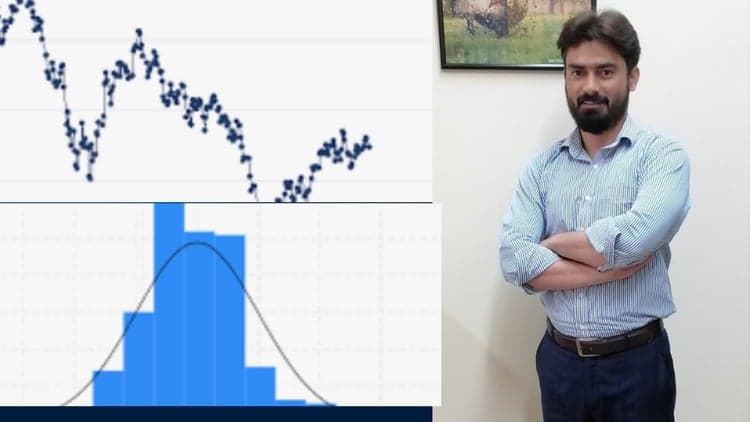
Course DescriptionThis course provides a comprehensive introduction to STATA, a powerful statistical software widely used in various fields such as economics, sociology, political science, and public health. The course focuses on the practical application of STATA, covering data management, statistical analysis, and interpretation of results. Students will learn how to perform a range of statistical tests, create meaningful visualizations, and draw valid conclusions from their data.

Through hands-on exercises and real-world examples, students will develop the skills necessary to effectively use STATA for their research and professional needs.Course ObjectivesTo provide students with a thorough understanding of the STATA interface and its functionalities.To teach students how to import, manage, and manipulate datasets in STATA.To equip students with the knowledge to perform a variety of statistical tests and analyses using STATA.To enable students to interpret and communicate the results of their statistical analyses effectively.To develop students’ ability to create and customize data visualizations in STATA.Introduction to STATAOverview of STATAInstallation and setupNavigating the STATA interfaceBasic commands and syntaxData types and structures in STATA Data Management in STATAImporting data from various sources (Excel, CSV, etc.)Data cleaning and preparationData transformation (sorting, merging, reshaping)Handling missing data Descriptive StatisticsSummary statistics (mean, median, mode, etc.)Frequency distributions and cross-tabulationsMeasures of dispersion (variance, standard deviation, etc.)Data visualization (histograms, bar charts, pie charts) Inferential Statistics IHypothesis testingt-tests (one-sample, independent, paired)Chi-square testsAnalysis of variance (ANOVA)Inferential Statistics IICorrelation analysisSimple linear regressionMultiple regression analysisAssumptions and diagnostics for regression modelsAdvanced Statistical TestsLogistic regressionFactor analysisTime series analysisPanel data analysisEstimating Models in STATADetecting MulticollinearitySolution to MulticollinearityStationarity of Time SeriesStationarity of Panel dataConverting non-stationary series to StationaryR-SqaureAuto-CorrelationRemoval of Auto-CorrelationJohansen-cointegration TestGranger Causality TestVARmodelForecasting in VAR modelVECM modelFixed EffectRandom EffectHausman Test Preparing Reports and DocumentationCreating tables and reports in STATADocumenting and annotating your workBest practices for reproducible researchSharing and collaborating on STATA projects Special Topics in STATASurvey data analysisHandling complex survey designsAdvanced econometric techniquesCustomizing STATA with user-written commands Review and Final ProjectReview of key concepts and techniquesQ&A and troubleshootingFinal project presentationsCourse wrap-up and feedback

Skills you'll gain

Social Scienceen

Available Coupons

Course Information

Level: All Levels

Suitable for learners at this level

Duration: Self-paced

Total course content

Instructor: Dr. Nasir Munir

Expert course creator

This course includes:

  • 📹Video lectures
  • 📄Downloadable resources
  • 📱Mobile & desktop access
  • 🎓Certificate of completion
  • ♾️Lifetime access
$0$100.99

Save $100.99 today!

Enroll Now - Free

Redirects to Udemy • Limited free enrollments

You May Also Like

Explore more courses similar to this one

Certification in Child Psychology and Child Development
Teaching & Academics
75 left

Certification in Child Psychology and Child Development

Udemy Instructor

Are you passionate about working with children? Do you want to make a meaningful impact on child development and ensure their safety and well-being?This exclusive course is designed for individuals who wish to deepen their understanding of child psychology and safeguarding practices, prepare them with the knowledge and confidence to support children through every stage of growth, and protect them from harm.Why Does This Course Matter?Children are among the most vulnerable members of society, and ensuring child development and protection is crucial. This course provides the essential knowledge and practical skills needed to understand how children grow, think, and feel, and to safeguard children from abuse.Whether you're a part of early childhood education, a caregiver, a social worker, or simply someone who works closely with children, understanding child psychology helps you respond appropriately to their emotional, social, and developmental needs. At the same time, safeguarding training ensures you can recognise signs of abuse, respond properly, and follow legal procedures to protect children at risk.What's Special About This Course?The course explores the whole journey of child development. You will start by exploring essential principles of child psychology, including theories of attachment, emotional development, moral growth, and the challenges children face during infancy through adolescence. You’ll gain insights into conditions such as autism, ADHD, and intellectual disabilities, and learn how environmental factors like grief, separation, and family dynamics influence a child's development.The course then moves into the area covering topics safeguarding children, offering training on how to identify, respond to, and prevent various forms of abuse, including emotional, physical, and sexual abuse. You will get all information on safeguarding laws, child protection frameworks, risk assessments, online safety, and the importance of record-keeping. Special attention is also given to the needs of disabled children and children with SEND.The topics of child psychology and safeguarding children combine to provide child development and child protection. This course enables you to make informed decisions, take responsible actions, and support the well-being of every child.It's time to start your journey working with children in a safe, sensitive, and professional manner.So, Enroll Now!This course comes with the following Sections:Introduction to Child Psychology: Throughout this section, you’ll learn about psychology and child psychology. You’ll also learn about the different areas and stages of a child's growth and development.Overview of Attachment Theory in Childhood: Our course on child psychology, safeguarding, and early childhood development will cover attachment theories, phases, and elements here. The importance of early emotional ties between infants and their primary caregivers in influencing development will be covered in Bowlby's Attachment Theory.Understanding Privation, Deprivation, and Autism: Privation and deprivation have very negative effects on child development. This section will give you an in-depth look at autism, as well as the causes and symptoms of the condition.The Impacts of Grief and Separation on Child: This section of the course explores how grief and separation affect children emotionally, psychologically, and overall development. Learners will gain insight into the process of bereavement and how children of different ages respond to loss.Social and Emotional Development of a Child: This section will discuss child development and the areas of social and emotional development.Moral Development: The purpose of this section is to provide information on the moral development of children and theories on the development of morality.Factors Influencing the Development Process: Here, we will teach you about parenting issues, stress, and the significance of problem development.Problems During the Infancy Period: This section presents some common issues during the infant period, such as sleep and toileting problems, as well as intellectual disabilities, specific language delays, and specific learning disabilities.Understand the Childhood Problem. This part discusses childhood problems like attention, hyperactivity, fear, and anxiety, what triggers these problems, and available treatments. You’ll also learn various theories about the causes of ADHD and its treatment.Problems of Adolescence: The focus of this part of our Child Psychology, Safeguarding and Early Child Development course is drug abuse and treatment. You’ll also learn about biological theories and lots more.Introduction to Safeguarding Children: Throughout this section, you will learn what safeguarding is, who is most vulnerable, and all the essential principles behind it.Laws and Guidance: This part of the course breaks down the key legal frameworks that underpin child protection and safeguarding practices.Child Abuse: Any inappropriate or abusive behavior toward a child by an adult is considered child abuse. The various types of child abuse are covered in this part, along with their signs and consequences for learners.Sexual Abuse: We will go over how to identify a child who is at risk of sexual abuse in this section of the course. Additionally, the discussion will inform learners on the consequences and impacts of sexual abuse.Risks And Risk Assessment: The risk factors for domestic violence and how to identify the harm to children will be covered in this course. In addition, we will talk about ways to make it safe for kids to learn in schools.Responding to Disclosure and Reporting: This session focuses on teaching you how to react when a child admits that they have experienced abuse in a variety of ways. This session also covers how to report child abuse when you notice it.Protective Factors for Child Maltreatment: This section will go over the six protective factors of child maltreatment and provide an overview of each one.Record Keeping: You will learn about safeguarding, making strategic record-keeping decisions, and much more in this part of our Child Psychology, Safeguarding, and Early Childhood Development course.Online Safety: You will learn about internet safety and dangerous online challenges in this part of our course. Additionally, you will learn about online safety considerations for managers and education for the connected world.Development and Problems for Children: From this section, you will learn about child development stages and areas. You will also learn about sleep, parenting, and intellectual disabilities.Safeguarding Disabled Children: Aside from learning how to involve and listen to disabled children, this lesson will also provide you with guidance on the purpose and practice of working with disabled children.Laws and Regulations for Keeping Children Safe in Education: Everyone who works in a school or college must be trained in safeguarding children from abuse. Here we will teach you about the child-centered approach to safeguarding, keeping children safe in education (KCSE), and other related topics.

0.0743Self-paced
FREE$84.99
Enroll
Hypothesis Testing
Teaching & Academics
997 left

Hypothesis Testing

Robert (Bob) Steele

This course provides a comprehensive introduction to hypothesis testing, one of the most fundamental techniques in inferential statistics. The course is designed to guide students through the process of making data-driven decisions by evaluating claims about populations based on sample data. Beginning with the essential concepts of null and alternative hypotheses, students will learn how to construct testable statements about population parameters and will explore the reasoning behind the formulation of these hypotheses. The course will emphasize the critical role of hypothesis testing in drawing conclusions in various real-world contexts, from scientific research to business decision-making.A key focus of the course will be the framework for making decisions using sample data. Students will develop a deep understanding of statistical significance and the logic behind rejecting or failing to reject a null hypothesis. They will also become familiar with the critical concepts of Type I and Type II errors, learning how to interpret p-values and confidence levels, and gaining insights into how these affect conclusions in hypothesis testing. Throughout the course, students will engage with one-sample and two-sample t-tests, z-tests for population proportions.By the end of the course, students will have the tools and knowledge to apply hypothesis testing to a range of research and business problems. They will also be equipped to critically evaluate the results of hypothesis tests reported in academic studies and the media. With an emphasis on both theoretical understanding and practical application, the course prepares students to confidently use hypothesis testing in their future academic and professional endeavors.

4.14.2KSelf-paced
FREE$82.99
Enroll
Bell Curve
Teaching & Academics
997 left

Bell Curve

Robert (Bob) Steele

Embark on a comprehensive and in-depth journey into the fascinating world of the Gaussian or Normal Distribution, a cornerstone of statistical analysis and a critical tool for researchers, scientists, and analysts across diverse domains. This course, meticulously crafted for undergraduate students and professionals alike, unveils the layers of the Gaussian Distribution, elucidating its foundational role, intrinsic properties, and multifaceted applications.Tracing the historical footsteps of the great mathematician Carl Friedrich Gauss, we explore his groundbreaking work and the subsequent emergence of the Gaussian Distribution as a pivotal tool in statistical studies. From predicting the position of celestial bodies to its modern-day applications in quality control and finance, the course paints a vivid picture of the distribution's significance and evolution.Dive deep into the characteristics and properties of the Normal Distribution, learning to navigate its bell-shaped curve and symmetrical nature. Understand the critical roles of mean and standard deviation, and how they shape and define the distribution. Delve into the specifics of the Standard Normal Distribution, mastering the use of z-scores for standardizing and interpreting data.Explore the intricacies of areas under the curve, and how they translate into probabilities and meaningful interpretations. The course provides a robust understanding of why the Gaussian Distribution arises so frequently in nature and statistics.Through a myriad of practical examples, from the distribution of physical traits in populations to the analysis of sports statistics and outcomes in games of chance, the course demonstrates the ubiquity of the Gaussian Distribution.This course is not just a statistical endeavor; it is a journey of discovery, insight, and application. It empowers students and professionals to not just understand the Gaussian Distribution but to wield it as a powerful tool in their analytical arsenal.

4.85.5KSelf-paced
FREE$99.99
Enroll